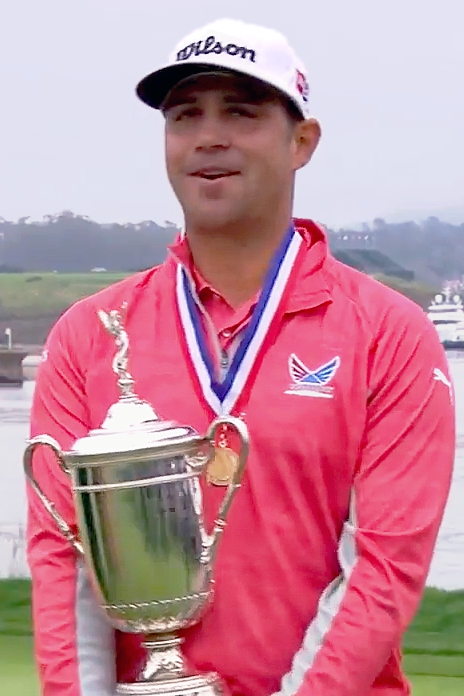
From Basketball Star to Golf Pro: The Gary Woodland Story
The world of professional golf is often seen as a realm of precision, calm, and years of single-sport dedication. Yet, every so often, a story emerges that defies convention, showcasing an athletic journey forged in unexpected fires. Such is the compelling
Gary Woodland story – a narrative of raw talent, relentless drive, and a pivotal transition from the hardcourt to the lush fairways of the PGA Tour. A Major champion, Woodland's path to golf stardom wasn't straightforward; it was an odyssey rooted in a fierce love for basketball, culminating in a dramatic shift that ultimately led him to the pinnacle of his sport. His is a tale that illustrates the power of adaptability, the influence of competitive spirit, and the enduring quest for one's true calling.
From Court Dominance to the Fairway: Woodland's Unexpected Path
Born in Topeka, Kansas, Gary Woodland was, by all accounts, destined for basketball greatness. From a young age, his athleticism and competitive fire were unmistakable. At Shawnee Heights High School, Woodland excelled in both golf and basketball, but it was on the court where his passion truly ignited. He wasn't the tallest player, standing "barely" 185 cm, but he played with an intensity and dedication that bordered on ferocious. Defenders knew they were in for a battle when facing Woodland, whose commitment to his portion of the court was absolute. This aggressive style wasn't without its consequences; once, his zeal for a tackle landed him in the hospital, a testament to his all-in approach.
His basketball prowess caught the attention of numerous universities, and he initially committed to Washburn University, a Division II powerhouse, on a basketball scholarship. Here, he showcased impressive skills, averaging over 10 points per game in his freshman year. Yet, despite his success and undeniable talent, a nagging feeling persisted. Woodland had always played golf, maintaining a scratch handicap even during his basketball-intensive years. The decision to pivot from a promising basketball career to fully embrace golf wasn't easy, but it was driven by a deep introspection about his long-term potential. While his height might have capped his ceiling in basketball, his powerful swing and innate feel for the game suggested limitless possibilities on the golf course. The move to the University of Kansas on a golf scholarship marked the official turning point, setting him on a trajectory that would redefine his athletic identity.
The Masters Moment: A Glimpse of Greatness Amidst Augusta's Charm
The Masters Tournament at Augusta National is a place steeped in tradition, where modern technology takes a backseat to classic golf spectacle. With no cellphones, video boards, or public address announcements, news travels in hushed tones, rising cheers, and the steady updates on hand-operated scoreboards. It's an environment that cherishes romantic, old-school moments, and Gary Woodland provided just such a spectacle during one memorable Saturday.
Starting the day at three-over par, Woodland teed off hours before the leaders, with only a small contingent of friends and family following. The golfing world wasn't watching him; they were perhaps yearning for excitement in a tournament that, at that point, hadn't delivered its usual drama. Then, something extraordinary began to unfold. Woodland birdied No. 1, then eagled No. 2, instantly moving to even par for the event. Murmurs turned into whispers, then growing roars that swept through the pines. By the time he birdied No. 6, a buzz was spreading: "Gary Woodland is on fire!" and the inevitable question, "Who is Gary Woodland?"
Indeed, the 29-year-old, two-time PGA Tour winner wasn't a household name, but that was rapidly changing within the hallowed grounds of Augusta. Birdies on Nos. 8 and 9 capped an incredible front-nine 30, tying a tournament record. Woodland was in "a zone you want to be in," later stating his intention was "trying to birdie every hole." This blistering seven-under-par performance over just 10 holes propelled him into the top 10, ensuring his name, once an obscure entry, appeared prominently on the iconic scoreboards. Crowds converged, drawn by the palpable excitement of an unexpected surge. This electrifying run, even if ultimately unsustainable, provided a thrilling, out-of-nowhere display of brilliance that reminded everyone of the Masters' unique magic. For an in-depth look at this incredible performance, explore
Gary Woodland's Masters Surge: Reliving His Record-Tying Front Nine and delve into
Gary Woodland's Electrifying Masters Run: An Unforgettable Augusta Moment.
The Pinnacle: Conquering the U.S. Open and Beyond
While his Masters surge captured hearts, it was the 2019 U.S. Open at Pebble Beach that cemented Gary Woodland's place in golf history. Facing off against a charging Brooks Koepka, then the dominant force in major championships, Woodland displayed nerves of steel and an exquisite touch that belied his power-hitting reputation. His iconic chip shot on the 17th hole in the final round, followed by a clutch birdie putt on the 18th, sealed his first Major championship victory.
This triumph wasn't just a win; it was a validation of his entire career trajectory. It showcased the culmination of years of hard work, a testament to overcoming challenges, and a testament to his decision to pursue golf professionally. Woodland's game is characterized by immense power off the tee, but his U.S. Open win highlighted his underrated short game and remarkable composure under pressure. He consistently ranks among the best ball-strikers on Tour, known for his piercing iron shots and ability to scramble when needed. The victory at Pebble Beach catapulted him into the elite ranks of golf, proving that the former basketball player possessed all the tools—physical and mental—to compete and win at the highest level.
Lessons from a Dual-Sport Athlete: What the Gary Woodland Story Teaches Us
The
Gary Woodland story offers valuable insights far beyond the confines of sports. His journey provides compelling lessons on skill transfer, mental resilience, and the courage to redefine one's path.
- Transferable Skills are Powerful: Woodland's basketball background undeniably contributed to his golf success. The hand-eye coordination honed on the court, the explosiveness in his swing, the spatial awareness, and perhaps most crucially, the mental toughness and competitive fire required in high-stakes basketball games, all translated seamlessly to golf. Athletes often underestimate how skills developed in one sport can be incredibly beneficial in another.
- Embrace Adaptability and Reinvention: Woodland had a promising basketball career, but he was astute enough to recognize where his ultimate potential lay. The decision to switch sports, even after achieving collegiate success, demonstrates a profound adaptability and courage to reinvent himself. It's a powerful reminder that sometimes the best path forward involves a significant detour or even a complete change of direction.
- The Mental Game is Paramount: Whether it was his aggressive defense in basketball or his "zone" mentality at Augusta, Woodland exemplifies the critical role of the mental game. His ability to perform under pressure, to focus intensely on each shot, and to maintain composure in championship moments, are hallmarks of elite athletes in any discipline. Developing mental fortitude is as crucial as physical training.
- Trust Your Instincts and Passion: Ultimately, Woodland's decision to pursue golf full-time stemmed from a deep-seated passion and belief in his own abilities. While others might have questioned leaving a successful basketball career, he followed his gut. This underscores the importance of listening to one's inner drive and pursuing what truly ignites passion, even if it means forging an unconventional path.
The
Gary Woodland story is more than just a recounting of athletic achievements; it’s a narrative about discovery, perseverance, and the remarkable journey of an individual who dared to challenge expectations. From the intense physicality of the basketball court to the strategic demands of championship golf, Woodland’s career trajectory is a powerful testament to the multifaceted nature of athletic excellence. His legacy is one of a champion who found his true calling, reminding us that greatness can emerge from the most unexpected of beginnings.